The crafts · sheet 07
Cut, set, pointed, carved
Four trades, six masons, two carvers and one apprentice who will be a mason in two years. What each one actually involves, at the length it deserves rather than the length that fits a card.
Bath · Monks ParkPortland · WhitbedPortland · BasebedYork · Hard YorkAncaster WeatherbedClipshamKettonHot-mixed limeNHL 2 and NHL 3.5Sharp sand, washedOak · air driedMilled lead · code 5
One · banker masonry
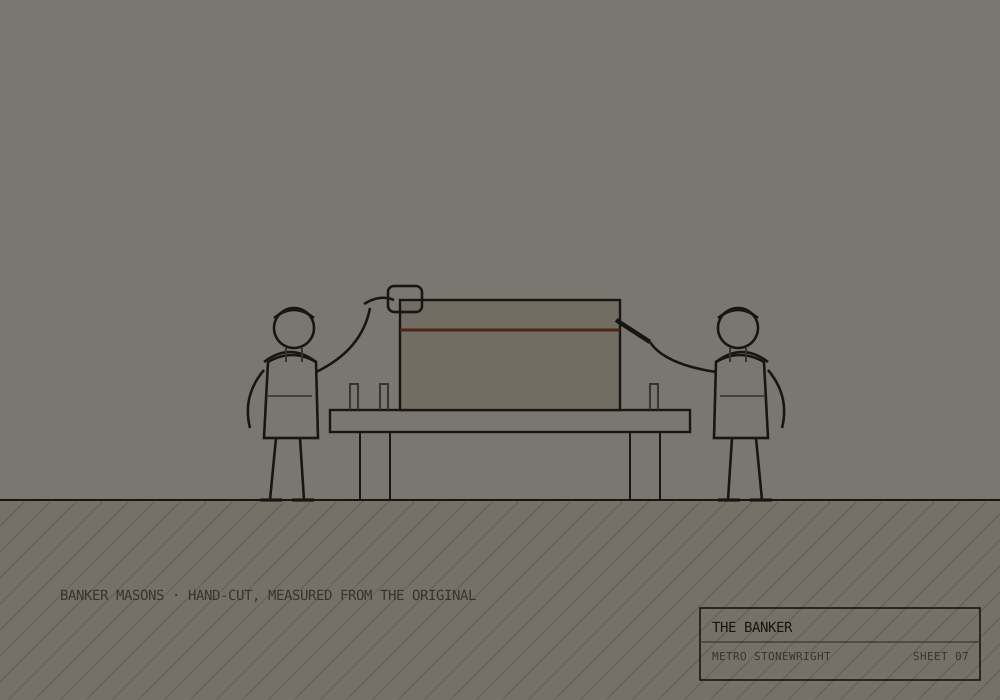
Every stone is cut to a template taken off the building
A banker is a bench, and a banker mason is somebody who works at one. The profile comes off the building in lead tape, is drawn full size, cut in zinc, and the block is worked down to it by hand with a mallet and chisels. A moulded stone takes a day and a half; an enriched one takes a week.
We saw blocks to size on a bridge saw, and everything after that is hand work. Not out of romance: a machine cuts a surface that is too flat and too even, and it shows on a building where everything around it was worked by somebody in 1840.
Two · lime
The mortar must be softer than the stone
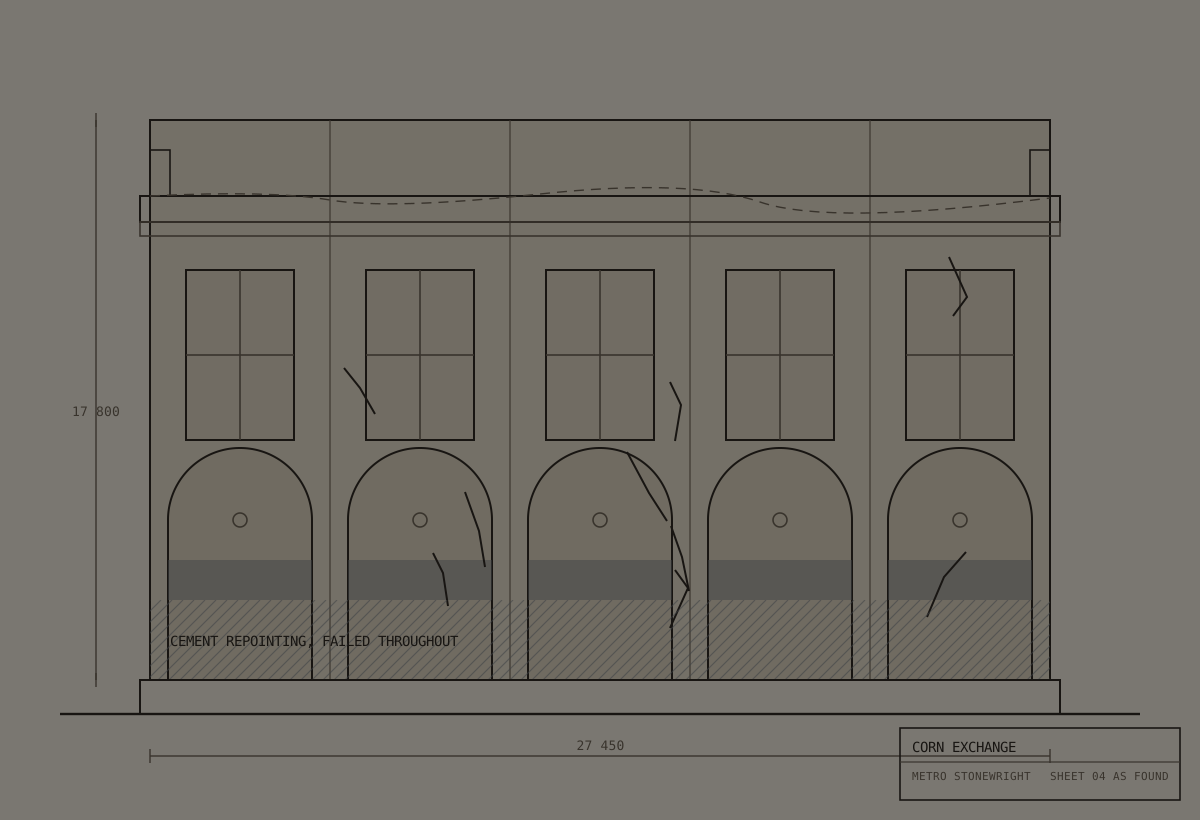
A joint is a sacrificial thing. It is meant to take the movement, hold the water and fail first, so that when it does you rake it out and point it again and the wall is as good as new. Cement is harder than most building stone, so the stone fails instead, and the stone is the expensive part.
We hot-mix on site, which means slaking quicklime into the sand and using it warm. It is more work, it cannot be bought in a bag, and it is the only mortar we will put on a historic wall.
If a quote for repointing does not say which mortar, it is cement. Ask, whoever you are asking.
Three · carving and lettering
Two carvers, and a waiting list
Enrichment, capitals, coats of arms, and cut lettering. Where a carved stone has weathered past reading we work from photographs, from the matching stone on the other side of the door, and from what the period would have done - in that order, and the drawing records which.
Lettering is cut with a chisel, never routed. A V-cut letter changes as the light moves across it during the day, and a routed one does not.
Four · survey and schedule
Nothing is cut before it is drawn and costed
The schedule of works lists every stone, what is wrong with it, what we propose, and what that costs. It is usually forty pages. It is also the document that lets you get a second price on exactly the same work, which is the point of it.
| Ref | Element | Condition | Proposal | Unit |
|---|---|---|---|---|
| S-014 | Cill, bay 2 | Delaminated, front face lost 40mm | Cut and replace, Bath Monks Park | each |
| S-015 | Cill, bay 3 | Sound, open joint at east end | Rake out and repoint in lime | m |
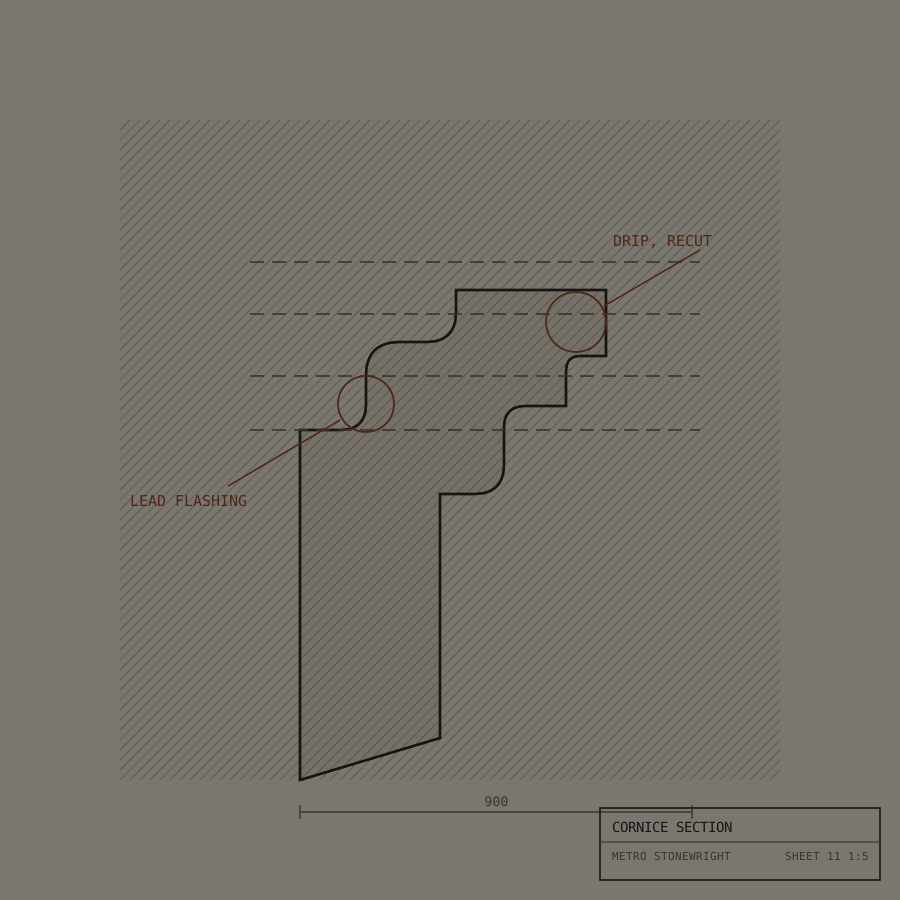
| S-022 | Cornice, bays 1 to 5 | Drip lost, water tracking back | Recut drip in situ | m |
| S-031 | Balustrade | Missing, 30 balusters | Carve new to surviving pattern | each |
| S-040 | Plinth | Cement render over face | Remove carefully, assess, repoint | m² |
The trades are the whole business. There is no sales team.
Metro Stonewright
Stonemasons and lime specialists. Founded 1968. Six banker masons, two carvers, one yard, and no subcontracted stone.
METRO STONEWRIGHT LTD · THE YARD, BRUNSWICK PLACE · ALL WORK TO BS 7913 AND THE SPAB APPROACH